Solarpellet: Pellet production with PV Power and Artificial Intelligence
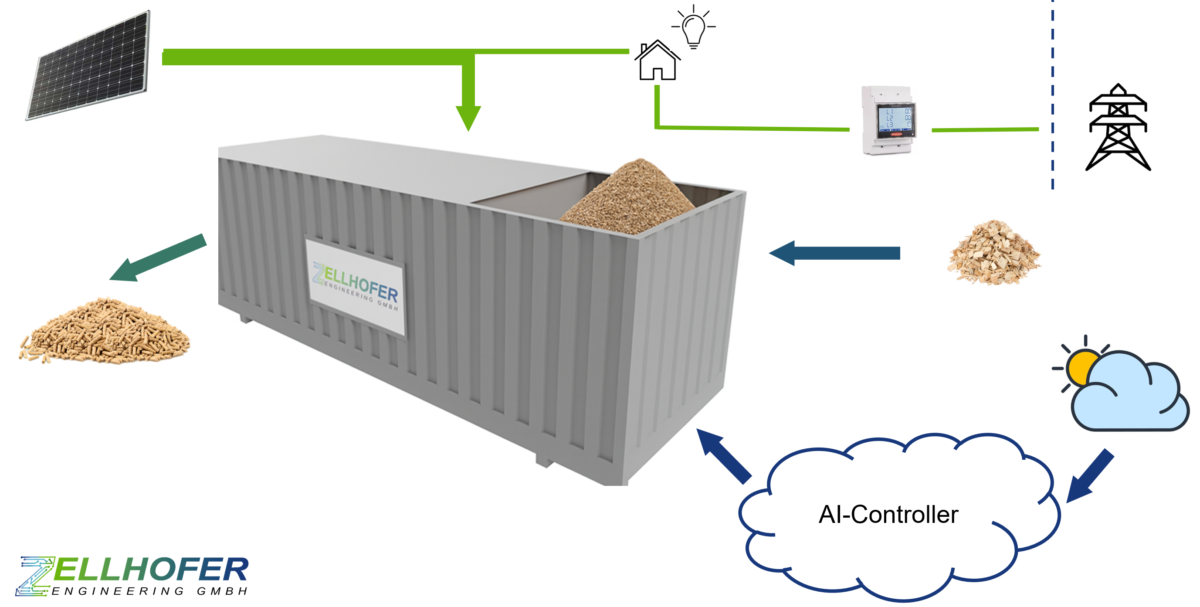
The Solarpellet project by Zellhofer Engineering GmbH is revolutionizing the way biomass is combined with other renewable energy sources. A mobile, fully autonomous pelletizing plant uses surplus photovoltaic electricity directly on-site to convert wood chips into high-quality wood pellets. Its unique feature is an AI-supported control system.
“While conventional pelleting plants are largely dependent on grid electricity, Solarpellet uses surplus solar power directly on-site. The AI takes over complete system control – it analyzes weather data, photovoltaic yields, and operating parameters in real time and, independently decides when and how production takes place,” explains Managing Director Sebastian Zellhofer.
Equally unique is the mobile, containerized design: the entire system is integrated into a truck swap-body system, requires no operating permit, and can be operated wherever sunlight and wood residues are available. This makes decentralized, flexible, and self-sufficient pellet production possible for the first time.
Solarpellet addresses a previously unsolved problem: photovoltaic electricity is often generated when it is not needed. With Solarpellet, this surplus is not fed into the grid, but is instead converted into storable, CO2-neutral biomass.
In addition to its technical innovation, Solarpellet makes a measurable contribution to climate protection: Every tonne of pellets produced saves up to 231 kg CO2 compared to conventional pellet production, as the process uses exclusively PV. The elimination of transport routes also significantly reduces indirect emissions.
The use of regional raw materials promotes a sustainable circular economy and strengthens agricultural production.
Implementation: Prototype 2025, start of series production in 2026 Location: Ringelsdorf System size: 7.45 m × 2.50 m (container dimensions, mobile, plug-and-play) Pellet production: 60–150 kg/h Energy consumption: approx. 120–130 kWh/t Pellets Energy source: 100% PV electricity Operation: Fully autonomous via AI control CO2 savings: approx. 231 kg/t pellets Reduction of transport emissions: up to 90%